Key Stage 3 Science
A one-to-one Key Stage 3 Science course that steadies the basics in Years 7 to 9, so GCSE lessons start from solid ground.
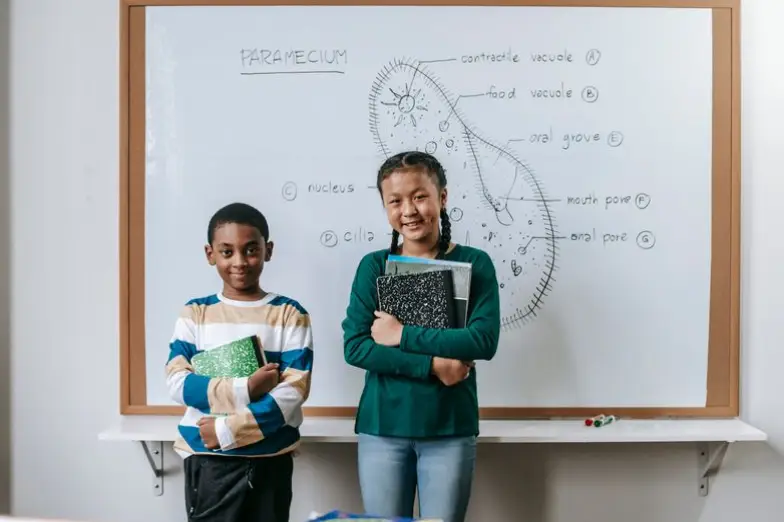
Key Stage 3 science is the ground floor of GCSE biology, chemistry and physics. In Years 7 to 9 pupils meet cells and particles, forces and energy for the first time, and the way they learn to write up a practical or read a graph in these years tends to follow them into Year 10. Our one-to-one course gives a pupil regular space to ask the question they would not ask in a class of 30, and gives you a written view of what is secure and what is still wobbling.
We teach pupils aged 7 to 18. This course is the Key Stage 3 slice, so it is built for Years 7 to 9. Lessons are one-to-one, online or at home, with DBS-checked qualified tutors. You receive progress reports for parents, so you are not relying on an end-of-term guess.
What the course covers
Start with the school's scheme of work. Most schools move through cells and body systems, particles and chemical reactions, forces and electricity, ecosystems and the Earth. We follow the same sequence your child's class is using, then go back to any earlier idea that is holding up the current one. If a pupil cannot explain why a plant cell has a cell wall, respiration and diffusion will stay foggy. So we fix the earlier layer before pushing on.
Working scientifically runs through every topic. We spend time on the words that carry marks: independent variable, control, repeat, anomaly. Pupils practise writing a method that someone else could follow, drawing a results table with units in the headings, and writing a conclusion that answers the question asked. Maths in science gets its own attention: unit conversions, averages, plotting points, drawing a line of best fit. None of this is separate from the content. It is how the content is assessed.
By the end of Year 9, the aim is a pupil who can read a short science passage, pick out the command word, and start an answer without freezing. We also build the habits that GCSE teachers expect: a dated exercise book and a topic list with gaps marked. Then a habit of checking work against the question.
Who it suits, and who it does not
This course suits a Year 7 pupil who is finding the jump from primary science harder than expected. It suits a Year 8 pupil who coasted through the first year on common sense and has met a topic that needs a method. It suits a Year 9 pupil who is thinking about GCSE options and wants to know whether separate sciences or combined science is the better fit. A pupil who has missed a term through illness, or who has changed schools mid-year, often has a gap that is easy to name but harder to fill without going back over the earlier steps.
It also suits the quiet pupil. Some children understand more than they show in class, then lose marks because they will not put a hand up. One-to-one lessons give them a low-pressure place to say an answer out loud and correct it.
It is not GCSE cramming. If your child is in Year 10 or 11 and needs exam technique under time pressure, our GCSE Science and GCSE Exam Preparation pages are the right place. It is not A-level. And it is not a replacement for school. We support the class teacher's sequence; we do not set a parallel curriculum. A pupil who will not open the exercise book will not get much from the lesson, however good the tutor is.
How the lessons work
Before the first lesson
We ask for the school year, the current topic list, the last school report if you have it, and a short description of where the friction is. A photo of the exercise book page is often more useful than a description. We do not ask for a formal test before we start.
The first lesson
The tutor uses low-stakes questions to find out whether the issue is vocabulary, maths or confidence. A pupil may say they do not understand forces when the real gap is that they cannot read a scale or rearrange a simple equation. We name the gap, then agree a short plan with you and the pupil.
A typical lesson
We begin with two quick retrieval questions from an earlier lesson. Then the tutor explains one idea, the pupil tries a worked example, and they move to independent questions. The pupil does the explaining back at the end. We keep our own talking to the parts that unblock the next step. If a pupil can teach the idea back in plain words, we know it has landed.
Between lessons and reports
The pupil leaves with a short task of two or three questions, not a worksheet pile. We send written progress reports for parents at the points we agree at the start. Reports say what has been covered and what needs another look. They do not contain a predicted GCSE grade.
What to prepare or bring
For online lessons, your child needs a device with a camera and microphone, a quiet room, an exercise book and pen, a calculator, the school topic list, and any recent assessment. For home lessons, the same, plus a clear table. A phone screen is too small for graph work, so a laptop or tablet is better.
Send the school's topic list before the first lesson if you can. If the school uses an online homework platform, a screenshot of the last marked task helps us see the command words your child is missing. Tell us about any access arrangements the school uses, such as coloured paper or extra time, so we keep the same approach. We do not need a diagnosis or a report from a specialist. We need to know what helps.
What affects the timing and the price
Four things shape the plan. The first is how many earlier topics need rebuilding. A pupil with one shaky topic may need a few lessons; a pupil who missed most of Year 7 may need a term of steady work. The second is frequency and lesson length. The third is whether you choose online or home lessons, because home lessons depend on where you live and which tutors are available. The fourth is the school calendar. A block of lessons before the Year 8 end-of-year test has a different shape from steady work across a term.
Timing also depends on the pupil's pace. We would rather cover two topics properly than four in a rush. Fees are on request and confirmed when you book. Lesson times and opening hours are confirmed when you book. Call +44 161 6306222 or email [email protected] to ask about a place. If you are reading this after the October parents' evening, you are not late; the useful work is often in the weeks that follow.
Questions parents ask
Is this the same as GCSE preparation?
No. Key Stage 3 science builds the vocabulary, maths and practical write-up habits that GCSE assumes. If your child is already in Year 10 or 11, ask about GCSE Science instead.
Can we choose online or at home?
Yes. Lessons are one-to-one, online or at home. Tell us your preference when you book. Availability for home lessons depends on your area and the tutor's timetable.
Do you follow the school's topics?
Yes. We ask for the topic list and work in the same order where that helps. If a pupil needs to go back to an earlier idea, we do that and then return to the class sequence.
How often do we get a progress report?
We agree the points when we start, so the report arrives when it is useful to you rather than at a fixed interval that suits nobody. Ask when booking.
My child is in Year 9. Can this help with options?
It can help them understand what separate sciences demand and where their strengths sit. We do not tell a pupil which subjects to choose. We do make sure the decision is based on how they think, not on one bad test.
- 10 weeks
- 20 lessons
- Beginner
- Priya Raman
On request for the full course
Skills your child leaves with
- ✓
Write clear conclusions from results
- ✓
Label diagrams accurately
- ✓
Understand particles and reactions
- ✓
Use simple equations correctly
- ✓
Explain methods in full sentences
How the weeks are laid out
-
Working scientifically
Variables, graphs and conclusions are practised using results your child collects or reads from a table.
-
Biology basics
Cells, digestion and plant processes are covered with simple diagrams drawn and labelled each week.
-
Chemistry basics
Particles, reactions and the periodic table are explained with short practical examples to hold onto.
-
Physics basics
Forces, electricity and space are taught with the equations kept simple and drawn out.
Start Key Stage 3 Science today
Book a first lesson and the tutor will map the weeks ahead before you commit to a full block.
Book a first lesson